Product Description
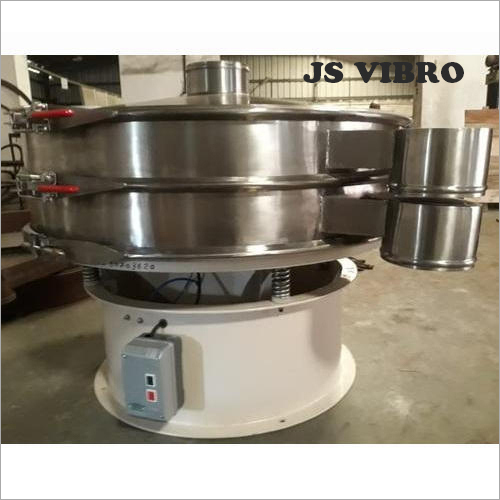
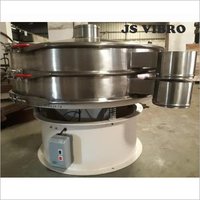
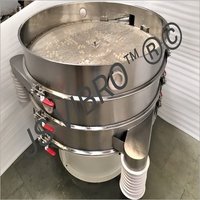
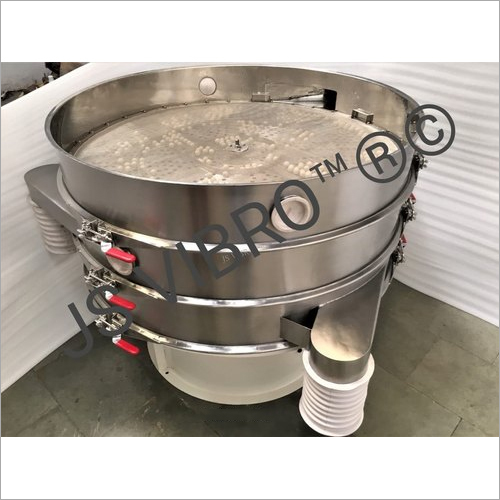
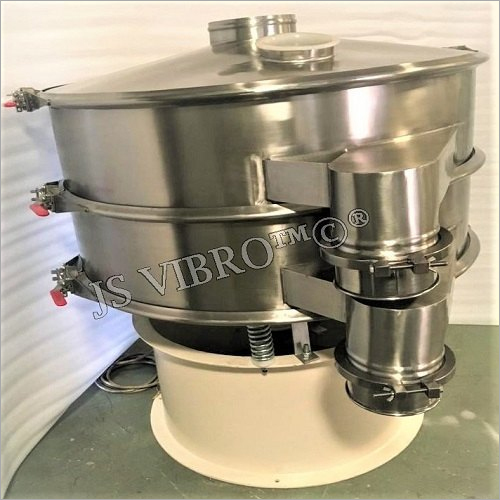
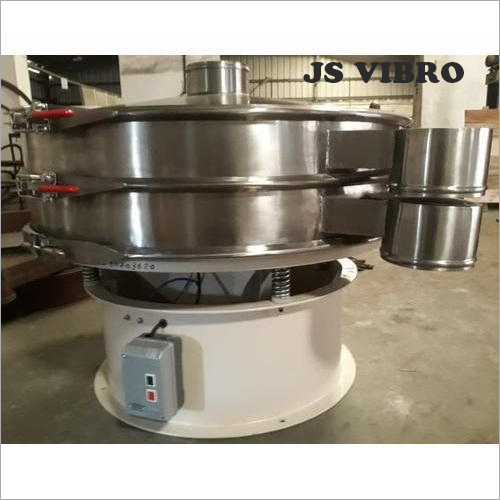
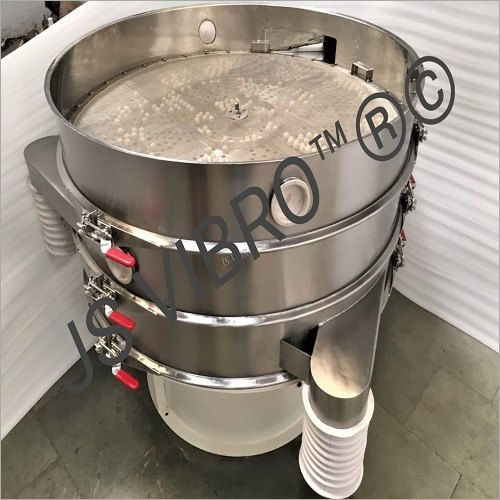
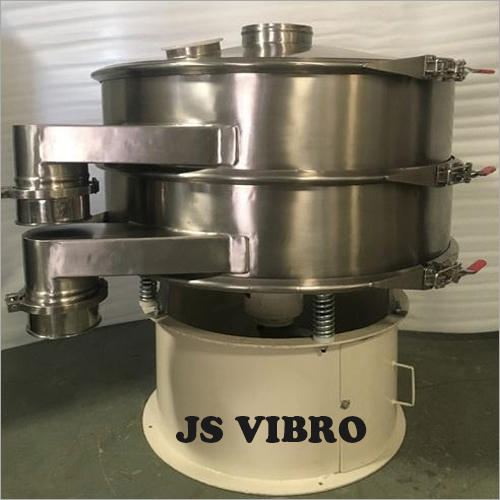
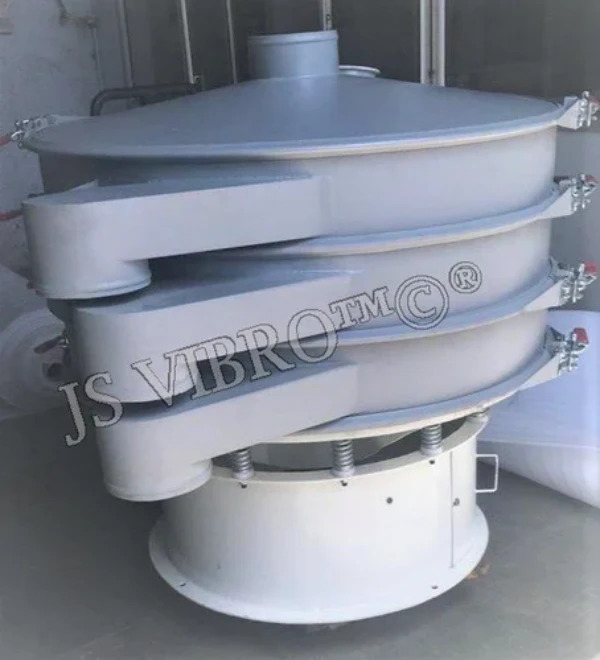
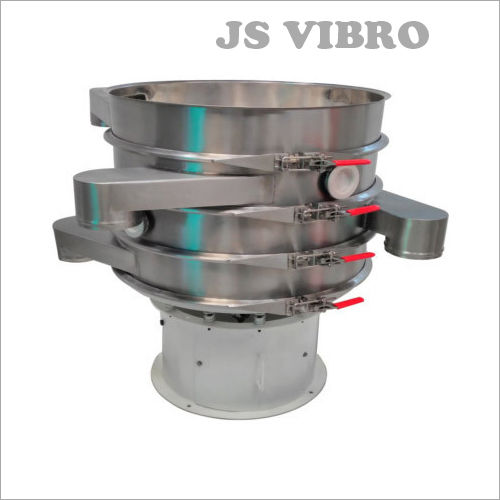
Round Vibro Sifter is used to separate solids from solids, liquids from solid and for gradation of materials. It is designed in such a way that multi plane vibration is achieved using a specially designed vibratory motor. Being precision engineered and sturdy in construction, this machine is also helpful in separating mass composition of solids, liquid from solid and for gradation of materials as per particle sizes. The offered Round Vibro Sifter is very useful and effective, for separating the fine and coarse particles in a mixture.
Product Details:
|
Voltage
|
440 V
|
|
Brand
|
JS Vibro
|
|
Automation Grade
|
Automatic
|
|
Material Grade
|
SS304, SS316 & 316L
|
|
Phase
|
Single Phase
|
|
Material
|
SS
|
|
Voltage
|
440 V
|
Customizable Design for Versatile ApplicationsThis vibro sifter is engineered for adaptability, offering single, double, or triple decks and mesh sizes ranging from 20 to 400. Whether you are processing bulk powders or specialty fine particles, the sifter can be easily configured to your needs. Its robust construction in stainless steel (SS304/SS316) or mild steel ensures long service life even in demanding environments.
Efficient, Accurate Sieving with Low MaintenanceThe machine delivers up to 99% separation accuracy, operating quietly below 75 dB and with minimal vibration, thanks to anti-vibration mounts. Swift assembly and disassembly facilitate cleaning and maintenance, while optional Cleaning-In-Place (CIP) systems further simplify sanitation processes. The durable finish resists corrosion, ensuring reliability over time.
Safe, User-Friendly OperationSafety interlocks (optional) and comprehensive accessories such as dust covers and control panels ensure safe operation and easy handling. Floor-mounted with anti-vibration pads and controlled via a simple on/off panel, the sifter does not require a digital display and fits seamlessly into various industrial workflows.
FAQ's of Round Vibro Sifter:
Q: How does the deck configuration affect the sieving process in the Round Vibro Sifter?
A: The sifter's number of decks (single/double/triple) determines how many separation stages occur in one operation. Multiple decks allow for simultaneous separation of particles into different grades, increasing throughput and efficiency for complex sieving tasks.
Q: What mesh sizes can be used, and why is this flexibility beneficial?
A: Mesh sizes from 20 to 400 can be fitted, and micron sizes are available on request. This enables precise control over particle size segregation, making the sifter suitable for fine to coarse materials in industries such as pharmaceuticals, food processing, and chemicals.
Q: When should the auto Cleaning-In-Place (CIP) system be chosen instead of manual cleaning?
A: The auto CIP system is ideal for applications requiring frequent changeover, stringent hygiene, or where manual cleaning is impractical due to process demands. It streamlines cleaning, reduces downtime, and helps maintain sanitary standards, especially in food and pharma industries.
Q: Where is the best place to install the vibro sifter in an industrial setting?
A: Install the sifter on a stable, level floor using the provided anti-vibration pads to minimize noise and vibration. Ensure proximity to both the raw material inlet and the processed product outlet for smooth workflow integration.
Q: What is the process for changing mesh or deck configuration?
A: Changing the mesh or adjusting the number of decks is straightforward due to the sifter's modular design. Simply unclamp and remove the desired sections, fit the new mesh or deck, and secure it with the provided clamps, all without special tools.
Q: How does using this vibro sifter benefit industrial operations?
A: It provides high accuracy (up to 99%), efficient processing, low noise, minimal downtime for cleaning, and customizable configurations. Altogether, these factors improve product quality, production efficiency, and workplace safety.
Q: What are the power and voltage requirements, and are they customizable?
A: The sifter operates on AC power, available in single or three-phase configurations, and supports voltage ranges from 220 to 440V. This allows adaptation to various facility power setups across different regions or industries.






 Send Inquiry
 Send Inquiry